

A lot of B2B businesses are wasting time on LinkedIn without realising it. They create a company page, post consistently, and expect visibility to follow. But despite the activity, many businesses still struggle to generate meaningful engagement, conversations, or opportunities.
The assumption is usually that more content or better consistency will solve the problem. In reality, the issue is often not how much you are posting, but where your visibility is being built.
Company pages are valuable, but they’re not designed to create attention in the same way personal profiles can. They act as a central place for your brand, updates, and information, but they don’t naturally benefit from the relationships and conversations that drive LinkedIn activity. Personal profiles work differently. They allow individuals within a business to share knowledge, contribute to discussions, and build credibility through ongoing interaction with their network.
Most businesses rely too heavily on their company page and overlook how much individual profiles already shape visibility.
Once you understand this distinction, your LinkedIn strategy changes. Instead of focusing only on improving a company page, the opportunity becomes building visibility through the people who already represent your business.
For most B2B companies, especially smaller businesses, personal profiles should come first. Company pages still play an important role, but they are most effective when there is already attention and credibility to support them. The key is knowing where your effort will have the biggest impact at each stage of growth.
What Is The Difference Between A LinkedIn Company Page And A Personal Page?
A personal profile is built around an individual and their expertise. It reflects their experience, opinions, and understanding of their industry. A company page represents the organisation itself and provides a central location for business information, updates, and brand activity.
The difference becomes clearer when you examine how visibility forms. Personal profiles connect through professional relationships, so content spreads through conversations, interactions, and existing trust. Company pages focus on representing the brand, so they rely on people engaging with and sharing content to extend reach.
This is why LinkedIn’s own guidance frames company pages as a way to establish presence rather than drive reach. Having a company page is important, but presence alone doesn’t create momentum. The businesses that perform well on LinkedIn usually combine brand visibility with the expertise and perspectives of the people behind the business.
Once you decide which profile should take the lead, consistency becomes far more important than simply having the account set up. Understanding how often you should post on LinkedIn helps keep both personal and company activity visible over time.
Why Smaller B2B Businesses Should Focus On Personal Profiles First
For smaller B2B businesses, personal profiles often provide the strongest opportunity for growth on LinkedIn. This isn’t because company pages are ineffective, but because trust is usually built between people before it’s built between audiences and brands. A founder sharing a lesson from a client project, a specialist discussing an industry challenge, or a team member explaining a common customer problem often creates more engagement than a company update. The reason is that expertise is often more effectively recognised when it’s shared through real experiences, perspectives, and conversations rather than brand-led messaging alone.
At a smaller company size, the focus should be on building recognition within your market by consistently sharing useful insights and contributing to the conversations already happening in your industry. The businesses that do this well focus on showing how they think, not just what they offer. Over time, this creates familiarity and trust with the people who matter. Once that foundation exists, the company page becomes much more effective because there’s already an audience / ecosystem and reputation behind the brand.
When A LinkedIn Company Page Becomes More Valuable
Company pages become more valuable as businesses grow and need a stronger central presence.
For companies with larger teams, ongoing recruitment needs, multiple services, or a growing collection of case studies and achievements, a company page provides structure and consistency. It gives customers, prospects, and potential employees a place to understand the business, explore updates, and see evidence of what the organisation does.
However, the company page should support the people within the business rather than replace them. A common mistake is moving all LinkedIn activity onto the company page while reducing personal engagement.
The strongest approach combines both. Personal profiles help create awareness and relationships, while the company page provides a consistent brand presence.
LinkedIn works best when it supports a wider B2B digital marketing strategy, with clear positioning, consistent messaging, and a defined approach to generating opportunities.
How To Use Both LinkedIn Pages Together Effectively
The most effective LinkedIn strategies don’t treat company pages and personal profiles as competing options. They work best when they support each other.
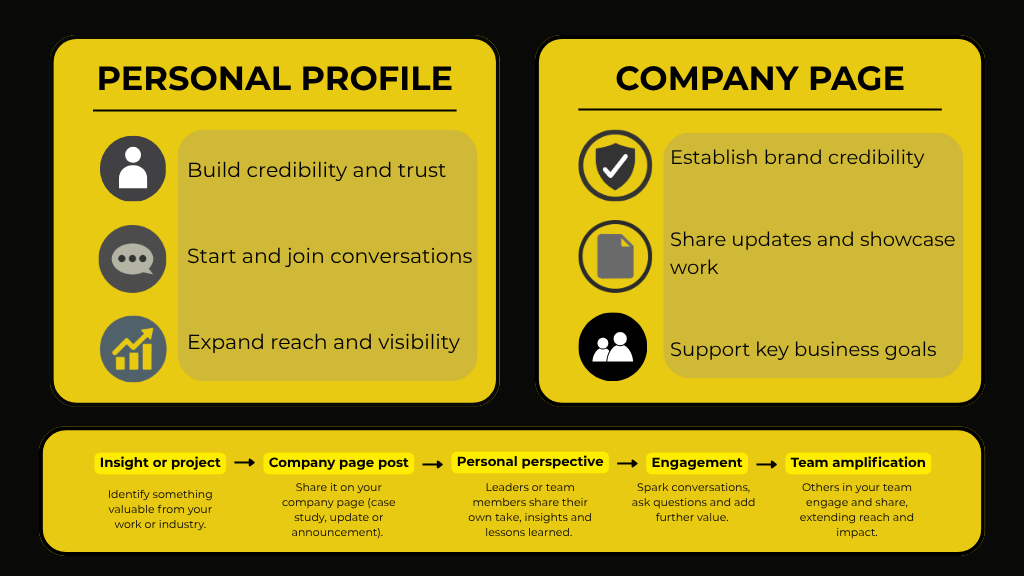
The company page provides the foundation. It can showcase case studies, announcements, business updates, and important milestones. It creates a central place where people can understand the brand. Personal profiles add the human layer. They allow team members to share experiences, explain decisions, and provide the context behind the work.
For example, a company page might share a completed project, while a founder or team member explains the challenges involved, what was learned, and why the outcome mattered. This is what makes LinkedIn different from many other marketing channels. The strongest results come from the relationships, conversations, and credibility built over time.
If you’re unsure what to publish, these LinkedIn post ideas for B2B personal pages are a useful starting point.
Final Thoughts
There is no single LinkedIn strategy that works for every B2B business. That being said, the order you prioritise your effort in makes a measurable difference to the outcome.
Most businesses default to building around their company page first because it feels like the most complete or “official” starting point. In practice, this often delays visibility rather than improving it. For smaller businesses in particular, personal profiles tend to perform better at the early stage because they sit closer to how trust forms in practice.
Choosing between a LinkedIn company page and a personal profile isn’t really about picking one over the other. The strongest businesses use both as part of a wider LinkedIn B2B marketing strategy, where your presence, content, prospecting and advertising work together to build credibility, visibility and long-term business growth.