

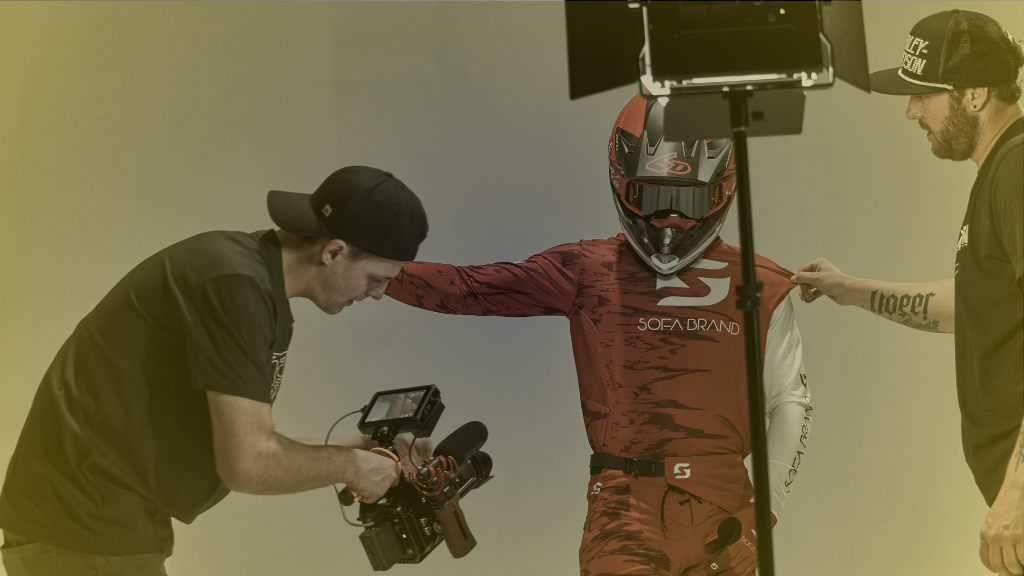
Photography for businesses plays a bigger role than many people realise. It is often the first thing a potential customer notices before they read a word of copy or understand a service in detail.
Whether it is your website, social media or sales materials, the quality of your imagery quietly shapes how your business is perceived. Strong visuals help create trust, while inconsistent or low-quality images can have the opposite effect.
This blog explores why photography for businesses matters, how it influences customer perception, and what good business imagery actually looks like in practice.
Why Photography Matters For Businesses
Photography for businesses is often the first point of contact between a brand and a potential customer. Before someone reads your website copy or explores your services, they are already forming an impression based on what they see.
Strong imagery helps businesses in a few key ways:
It builds credibility quickly. People often associate high-quality visuals with professionalism and reliability, especially in online environments where they have not yet established trust.
It supports brand identity. Consistent photography helps reinforce tone, personality and positioning across every channel a business uses.
It improves clarity. Visuals can communicate what a business does far faster than text alone, especially in service-led industries where the offering is not always immediately tangible.
In many cases, customers are not comparing services in detail straight away. They are making a quicker judgement about whether a business feels credible, current and aligned with what they expect. Photography often carries that weight before anything else has a chance to.
A simple way to think about it is this: before a customer understands what you do, they decide how you feel. Photography plays a major role in shaping that initial reaction.
How Photography Influences Customer Perception
Customer perception forms in seconds, and imagery plays a central role in that process. People naturally respond to visual cues before they engage with written information.
Strong photography helps to:
- Signal professionalism without needing explanation
- Create emotional connection through real-world context
- Reinforce consistency across marketing channels
There is also a cognitive element to how people engage with visuals. Research from MIT has shown that the human brain can process and recognise the meaning of images in as little as 13 milliseconds under controlled conditions, highlighting how quickly visual information is interpreted compared to other types of content. This speed of processing helps explain why imagery often shapes an immediate first impression when someone lands on a website or encounters a brand for the first time. Written content still plays a key role, but visuals often set the tone for how that content is received.
Professional Photography For Small Businesses
Professional photography for small businesses does not need to involve large-scale production or high-end studio setups. In many cases, a clear and consistent set of images is far more useful.
Small businesses often benefit from having a structured image bank that can be used across multiple touchpoints, from team imagery through to website and social media content, all supported by consistent, high-quality photography. This might include:
- Team and workspace imagery
- Product or service-in-action photography
- Day-to-day operational visuals
For example, a small consultancy that regularly shares insights on LinkedIn will benefit far more from having 20–30 consistent, on-brand images of their team, workspace and working environment than relying on occasional stock photos. Over time, this builds familiarity and makes their content instantly recognisable.
Inconsistent or generic imagery can quietly undermine otherwise strong businesses. Even when the service is high quality, weaker visuals can make it harder for customers to recognise that value at first glance.
Well-planned photography for businesses helps smaller teams appear more established and consistent, even without large resources behind them. It also removes the need to constantly search for visuals when creating content, making it easier to stay active and consistent over time.
A small sample from an image bank Digiwoods built for Assenta Rail is shown below. For more on how this works, explore our B2B photography service.












Final Thoughts
Business photography plays a practical role in how people understand and remember a brand. Consistent, well-considered imagery helps create clarity across every touchpoint, from first impressions through to deeper engagement.
Over time, businesses that invest in consistent visuals tend to feel more recognisable and easier to engage with, simply because their presence is clearer and more cohesive. When that consistency is in place, everything from marketing to sales is impacted positively.